Everyday this week at the Fusion Arts x House of Creativity, the work of a selection of talented artists will displayed.
At Fusion Arts x House of Creativity, we are proud to showcase a selection of the incredible artists Fusion has collaborated with over the years. Spanning studio residents, staff, and students, this exhibition offers a glimpse into the vibrant and diverse creative community we are privileged to support. The artwork on display utlises an eclectic and innovative variety of media, with themes ranging from identity, environmentalism, mobility and resistance. Read on to find out more about the featured Artists!
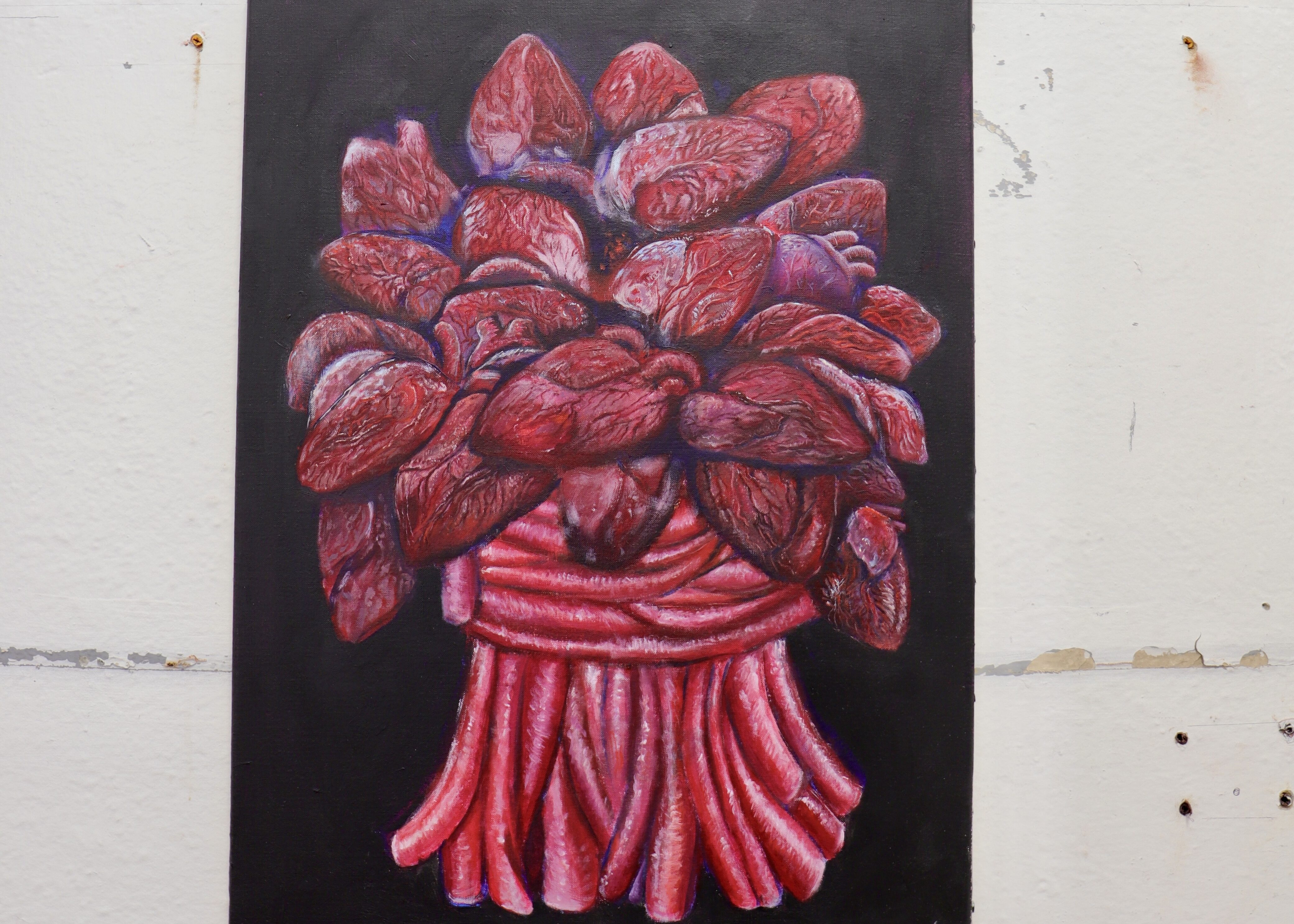
Sara Salo
Collection: Shadows Of Me. "Fallen" , "Hannibal", "Treadline"
Twenty-Four y/o realism expressionist artist follows one rule when it comes to her art and lifestyle, in her own words:
We are not made to fit in one box. Society tries to limit us to stay in that one box, and when we overflow over the edges of that box, it likes to point out that we “don’t fit in”, for us to shrink back into the place that they say we should fit.
One thing I always hated. Boxes. Lines, and rigid rules. Being an Artist, I know well it's often better to paint outside of the lines to create something remarkable.
As a Martial Arts Athlete, I know our limits our only the lines we create in our mind, of our capabilities. It isn’t set. Only by ones mind, it is. And what makes art truly great and athletes truly inspiring, is pushing the limits of every little rigid doubt we face everyday.
My latest Collection: Shadows of Me, goes directly against the current of delicate and faded expression. The combination of knots of daily emotions intensifies with our urge to untangle and understand, but when we do we also may find out how encapsulating and passionate we actually are, when we let ourselves to be. This work is a testimony to that; emotions, raw, intense and unfiltered.
I know that's the choice, so that we can understand better what we actually feel without the urge to hide away the fierce profoundness of it all.
Insta: @sarasal.studio @sarasal.x
Sara Salo: House of Creativity Artist Platform
Aiden Canaday
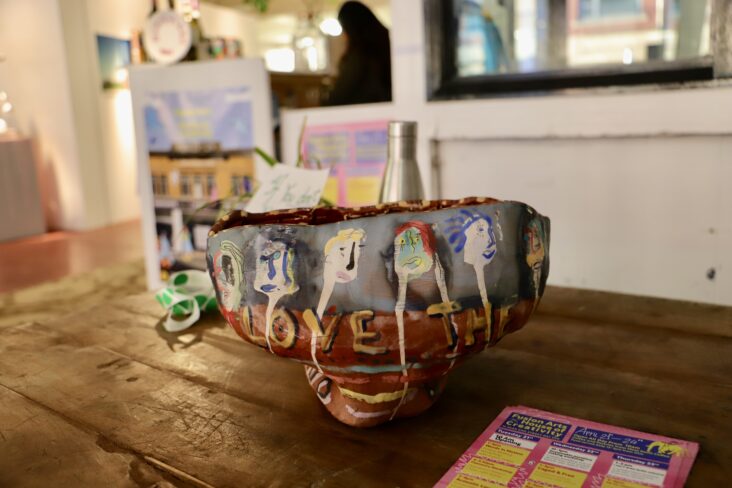
LOVE THE WORLD AROUND YOU!
Love The World Around You! was originally displayed as part of a joint exhibition alongside Shoshana Kessler at Fusion Arts' Gloucester Green space in March 2023. Other recent exhibitions include 'Life Vessels' at the Horse Hospital, London (2024) and Life is Art is Life at Fusion Arts window galleries (2022).
Aiden is an associate lecturer in Fine Arts at Oxford Brookes University and also runs Divine Schism, who are one of the UK's leading grassroots live music promoters. Aiden's relationship with Fusion Arts began in 2011 when he started putting on exhibitions and live music nights in the original Princes Street location and he's been making stuff happen in the music and arts community ever since.
Insta: @aidencanaday
Aiden Canaday: House of Creativity Artist Platform
Munir Al Sachroni
Tetiten Swarane Tandur
My works mostly connect the dots between the environmental damages and the political situation within Indonesia.
Therefore, for any disaster that has occured like the big Sumatran Flood, and several previous incidents were mainly caused by the unecological policies by the government. My work Tetiten Swarane Tandur attempted to show it all.
Insta: @Maring_420
Munir Al Sachroni: House of Creativity Artist Platform
Dolcie Obhiozele
OACCA Windrush Generation
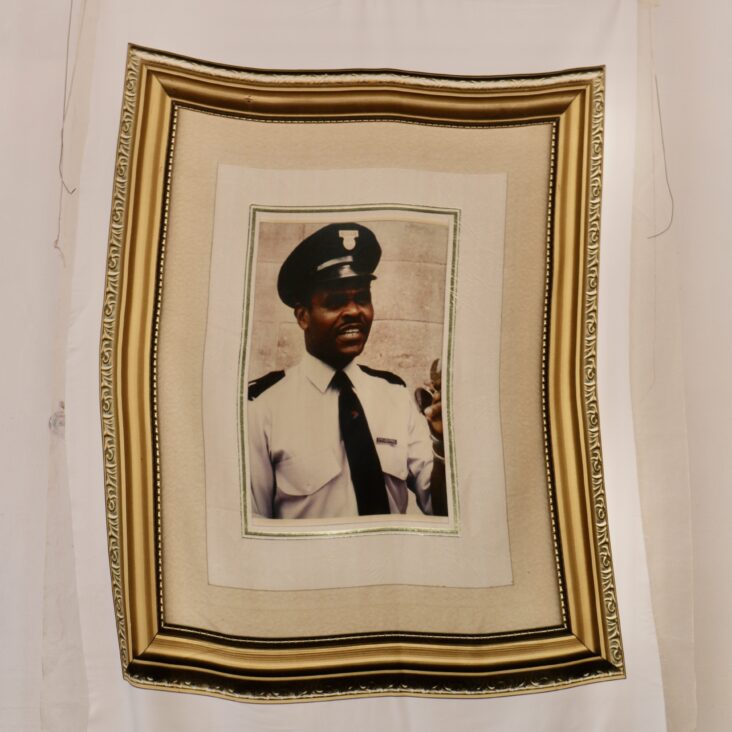
During the House of Creativity 2026, it was an honour to revisit the work from the “Windrush Years: Portraits of a Generation that rebuilt Britain”. Featuring large portraits of Mrs. Lewis, a dedicated nurse from Cowley Road; Mrs. Harris, elegantly dressed for a wedding; and Mr. Lewis, the city’s first Black bus conductor, as well as dresses, photos and elements familiar to Caribbean living rooms in the UK. This installation was originally displayed at Fusion Arts back in November 2024, shortly after we first moved into the space.
Huge thanks to Dolcie and Osmond. They are deeply embedded in Oxford’s African Caribbean community, supporting people of all ages and backgrounds. Their passion has always been about motivating young people to build the future. Dolcie looks to Oxfordshire Community Education Group (OCEG) and Oxford African Caribbean Community Archive (OACCA) to continue aspiring and inspiring new generations of promise.
Dolcie Obhiozele: House of Creativity Artist Platform
Zeashan Ashraf
Where Should The Birds Fly?
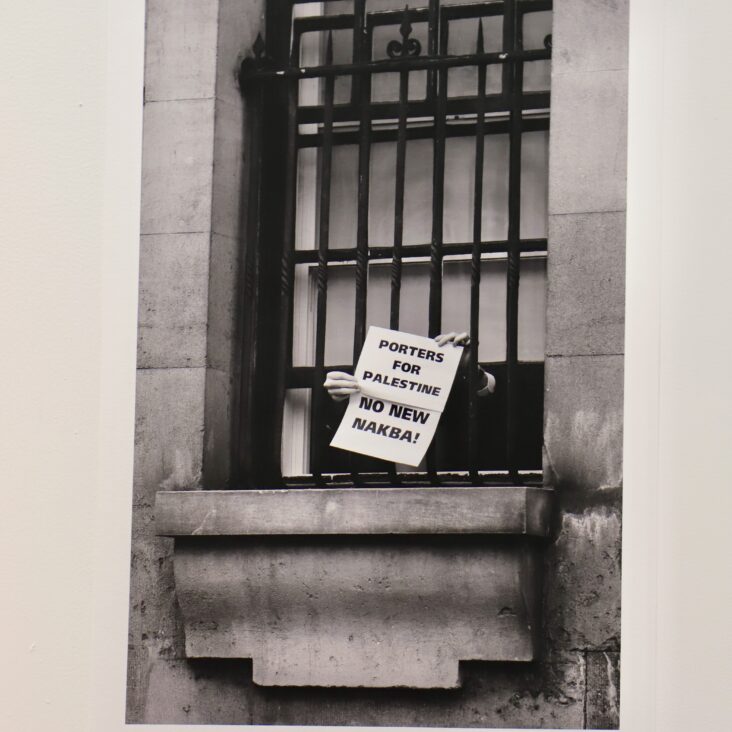
‘Oxford For Palestine’
‘Uprising Generation’
Zeashan Ashraf is a photographer living in London. His practice examines the complexities of mobility and belonging, focusing on how movement is differentially organised, and to the conditions under which it becomes possible, legible, or denied.
His photographs began as postcards for loved ones separated by borders, shaped by stories of migration within his family, friends, and the wider communities he has been part of in India and abroad. Before turning to photography, he worked in philanthropy and development, where he engaged with questions of access, movement, and inequality. He now draws on this experience to critically examine how power structures shape our understanding of the world, with ongoing projects that interrogate how mobility is controlled, how visibility is produced, and how these narratives are constructed.
Zeashan was born in Kerala, India, and grew up in Sharjah, UAE. He holds an MSc in Media, Communication and Development (LSE, 2023).
Insta: @zeashanashraf
Zeashan Ashraf: House of Creativity Artist Platform
Hopeful Sandati
A Very British Rhythm; commissioned by the Museum of Colour.
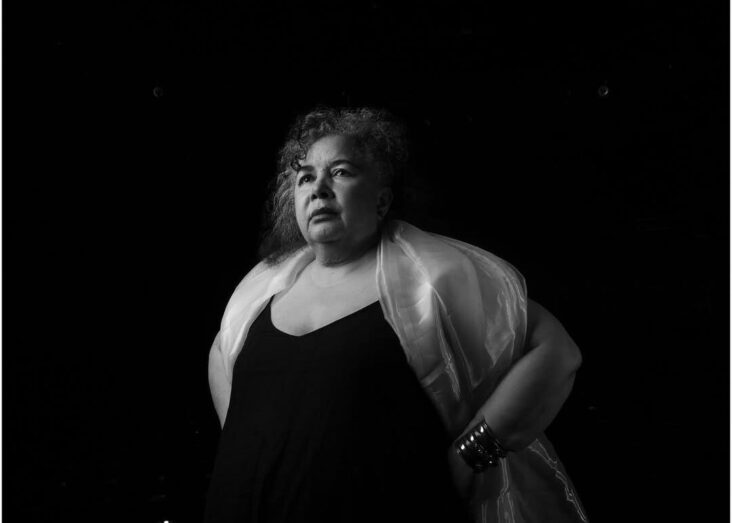
Hopeful Sandati is a British photographer and visual storyteller whose work explores identity, movement, and cultural legacy through portraiture. Blending technical precision with a cinematic, documentary approach, he captures both the presence and energy of his subjects. Commissioned by the Museum of Colour for A Very British Rhythm, Sandati brings a distinctive visual language to the project—merging stillness and motion through monochrome imagery. His work offers an intimate yet powerful tribute to the dancers and choreographers who have shaped British cultural life, preserving their stories with a timeless and contemporary edge.
Insta: @clear_shotsphoto
Hopeful Sandati: House of Creativity Artist Platform
Mita Vaghela
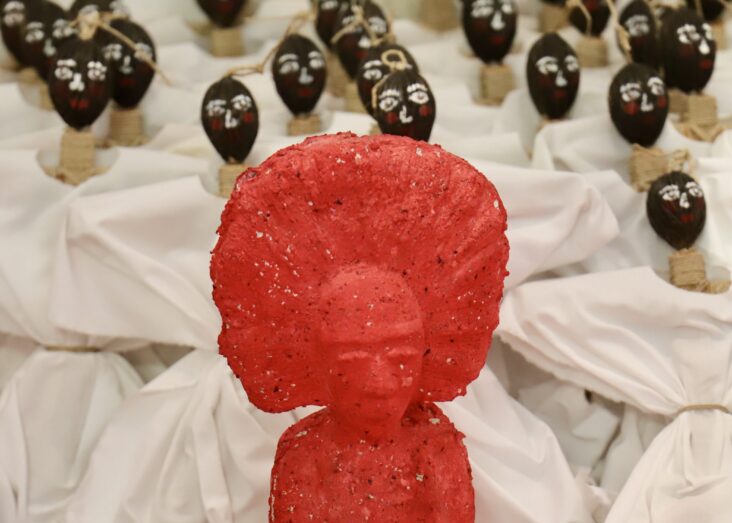
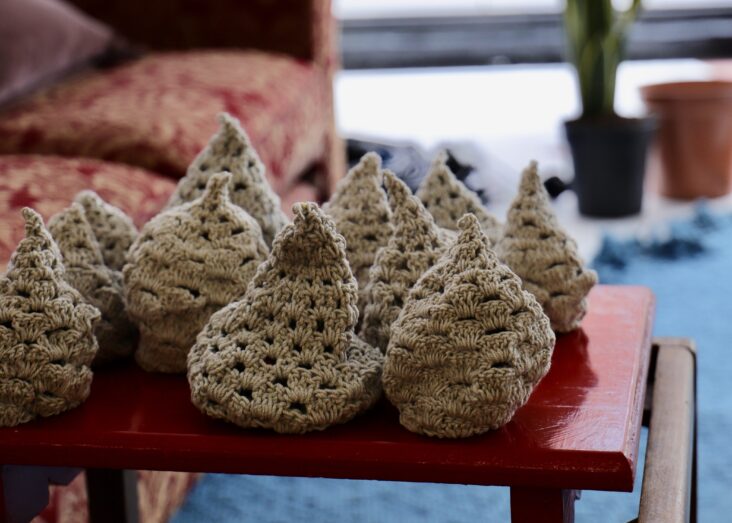
Docked (2024), Seaweed yarn and wooden stools
Self Made (2024) Coconut coir
My practice centres on questioning my social heritage and the value of the female through the lens of a British Indian woman. I have been unpacking my experience of growing up as a daughter of double diaspora in an attempt to discover a sense of belonging and examine the
construction of my identity. I am interested in looking at colonial and post-colonial theories, cultural studies, and diaspora discourse, interwoven with personal and shared anecdotal recollections.
The work is research led, encompassing a range of media including sculpture, film, food, photography, performance and drawing. I have a tendency towards favouring everyday objects and experiences as they are relatable as signifiers, and think that the ordinary should not be undervalued or overseen. My methodology involves initially researching an area, which will inform my media/materials as a starting point. I like to experiment and play with the materials, see how they behave. In turn, this will lead to new areas of research.
The repetitive process of making sculpture allow my thoughts to go from the banal to the existential. It usually requires setting up an initial system of production, freeing the mind to wander anywhere it wants to, whilst the material behaves in an innate manner. Materials and I work together and independently; and ultimately we find ourselves making each other.
Insta: @mitavaghela1
Mita Vaghela: House of Creativity Artist Platform
Abigail Edu
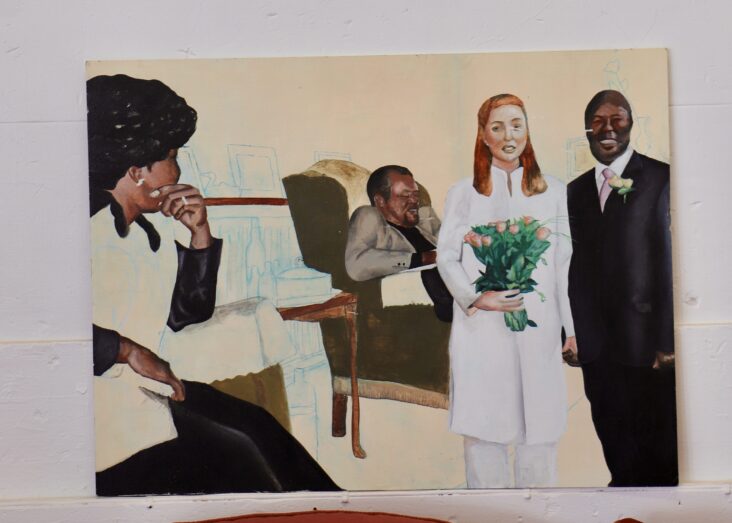
Untitled (Wedding)
I am a final year Fine Art student at the Ruskin School of Art, University of Oxford. My practice engages with oral narratives shared with me by a grand-maternal figure whose life spans Ghana and London. Her accounts trace experiences of marriage and motherhood, shifts across pre and post colonial Ghana, and questions surrounding women’s health. The work sits within conditions of partial access and second hand memory, shaped by what is told and reinterpreted over time.
This painting forms part of a sub-series that draws on photographic archives connected to her life. As I am not part of her family, I encounter these images without a wider context, coming to know the people pictured only through brief accounts she offers. The photographs become sites where I begin to assemble provisional understandings of lives and relationships that precede my knowing of her. When we revisit these images together, she sometimes shares fragments of context, including whether those depicted are still living. These exchanges prompt reflections on memory, and how loss is held over time. The figures within the archive take on a shifting, almost fictional quality as I imagine connections and extend narratives by merging images to construct new relationships.
Insta: @aabii_girll
Abigail Edu: House of Creativity Artist Platform
Jordi Raga
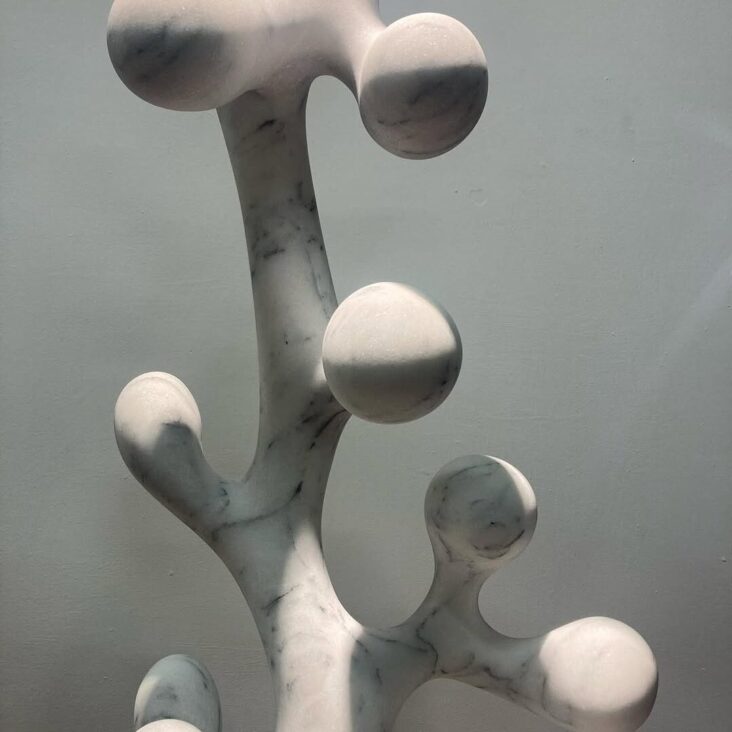
Household Planet
A constant thread in my practice is a fluid movement between the organic and
the geometric—an expression of the duality between body and spirit, the
material and the celestial—articulated through forms that symbolically evoke a
rhythmic interplay at the core of the artistic experience.
Insta: @jordiragafrances
Jordi Raga: House of Creativity Artist Platform
Katya Mora
My work explores the expression of natural and human forces: volcanoes, instincts and chaos, through painting, photography, installation and video. I am interested in tracing through matter that which can not be seen but can be sensed. I work with first-person narratives and focus on ecological transformation, seeking horizontal dialogues with nature that challenge extractive frameworks. My approach integrates ancestral knowledge and self-decolonisation perspectives to redefine the idea of landscape. Over time, my work has become increasingly research-based and process-led, incorporating personal archives and fieldwork.
Mexican-born artist Katya Mora, with a BA in Fine Arts from the Polytechnic University of Valencia (Spain) and the Bauhaus University Weimar. At present, Katya develops her visual artwork as part of Fusion-Arts Studios.
Insta: @katyamora_c
Katya Mora: House of Creativity Artist Platform
Ismael Rodriguez
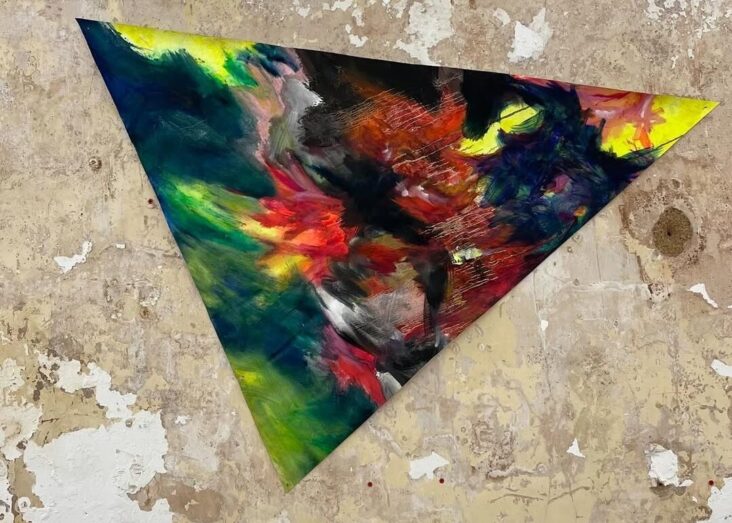
Born in Caracas in 1990, Ismael Rodriguez carries a heritage shaped by migration and ancestral memory. His father, an islander from Tenerife, passed down stories of seas and volcanoes, while his mother, whose roots trace back to the Guajira indigenous people, instilled in him the enduring spirit of a land never forgotten. This vital crossbreeding runs through his artistic practice, where themes of identity and the eternal return of movement are ever present.
Rodriguez studied Visual Arts at ULA in Mérida, Venezuela, where his training opened pathways of experimentation. Moving between the physicality of raw materials and the subtlety of digital images, his work oscillates between the tangible and the intangible, the figurative and the abstract, the digital and the primal act of painting. Through this dialogue, his creations inhabit a space between the modern and the ancestral, the ephemeral and the eternal.
Insta: @irodriguezfe
Valerie Asiimwe Amani
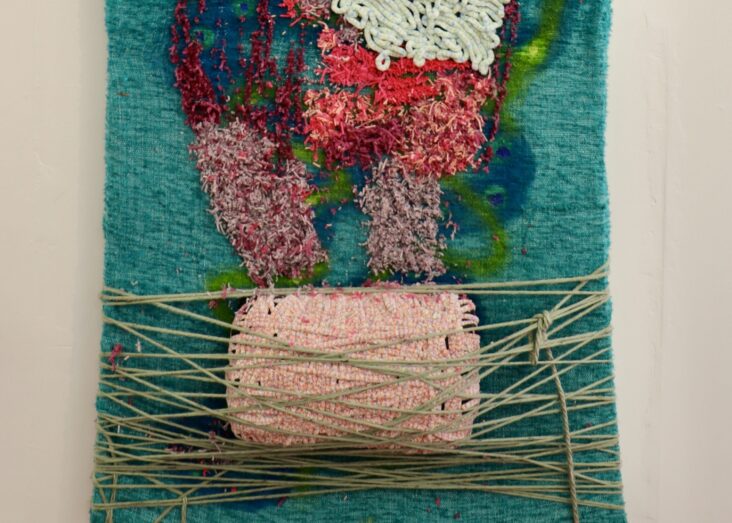
Open Wound, 2024
forgiveness
Valerie Asiimwe Amani is a Tanzanian interdisciplinary artist and writer whose work explores how body, language, and myth shape the self within and apart from community. Her art navigates the intersections of the political, domestic, and intimate, bridging these themes across various mediums.
Amani has exhibited internationally in cities like Lagos, New York, Paris, Cape Town, and Leipzig, with solo presentations in London and Dar es Salaam. Notable recent shows include In My Dream We Spoke Another Language at Forster Gallery Zanzibar, the performance Bahari Chumvi at ICA London, and Boundary Encounters at Modern Art Oxford.
Currently pursuing a PhD at The Ruskin School of Art, Oxford University, Amani has received prestigious accolades such as the 2023 Foundwork Art Prize, 2022 Ingram Prize, and 2021 Ashmolean Museum Vivien Leigh Prize. Her work has been featured in Art Monthly, Hyperallergic, and Texte Zur Kunst.
Valerie Asiimwe Amani: House of Creativity Artist Platform: https://www.instagram.com/p/DY...
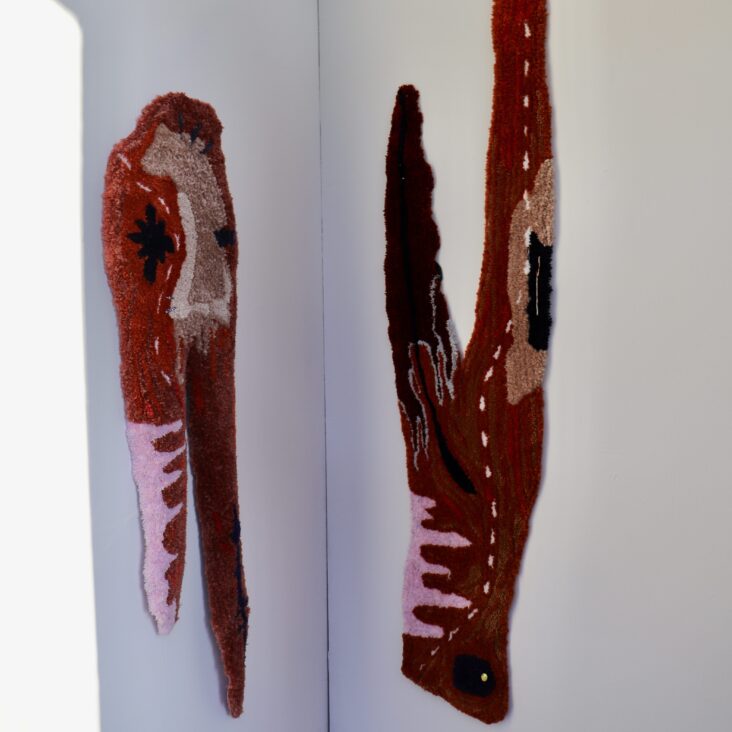
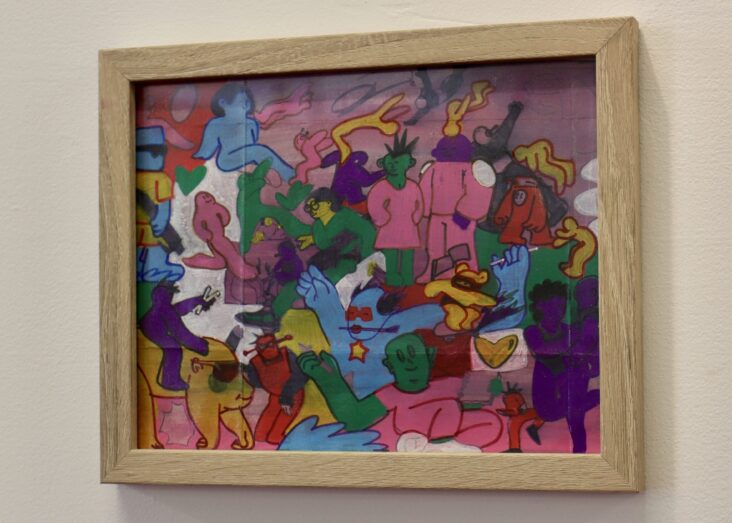
Julius Muraga
Born in Kenya, spent seven years there, then came to Oxford. Making things fun, bold and using colour in brave and interesting ways. I make all sorts of things from drawing to digital illustrations and paintings. I am inspired by the inner world, making sense out of chaos, train of thought, and the nice feeling, happy feeling, warm feeling and the sunshine, good food, exercise and laborious rhythms.
Insta: @juliusmuraga